
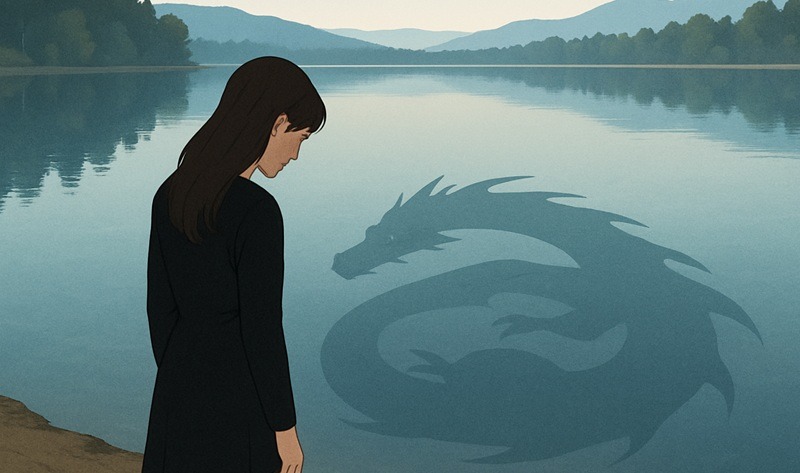

We all have them — the things we’d rather not think about. The questions that make our chest tighten, the memories that carry too much weight, the ideas that might unravel more than we’re ready to handle. We push them aside. We tell ourselves “not now.” But even when ignored, they don’t go away. They rest beneath the surface, like sleeping dragons.
The dragon is an old and durable symbol. In stories it often guards treasure, blocking the way with fire and teeth. In life, the “treasure” is usually something less dramatic but just as powerful: a hidden truth, a piece of unfinished grief, an unspoken desire, or a shift in perspective that could change how we see ourselves. The dragon sleeps because we let it. We avoid the cave, skirt around the lake, distract ourselves with safer paths.
Why? Because waking the dragon feels dangerous. If we look too closely at what we’ve been avoiding, we might lose control. We fear that the truth will burn us, or that it will demand changes we don’t feel ready to make. So we keep the dragon asleep, hoping silence will mean safety.
But ignoring a dragon has consequences. What we suppress doesn’t vanish — it leaks out in other ways. We find ourselves anxious without knowing why, repeating patterns we thought we’d escaped, or feeling strangely tired in the presence of something unnamed. The dragon shifts in its sleep, and the ground above it shakes.
Facing a dragon doesn’t mean fighting it. In fact, most of the time, the dragon isn’t an enemy at all. When we dare to look — carefully, gently — we often find that what we feared is less monstrous than imagined. Yes, it breathes fire, but that fire can illuminate as well as destroy. The dragon’s hoard is not gold coins; it’s insight, clarity, the return of energy we lost by keeping something hidden.
The hardest part is the first step: choosing to enter the cave, or to sit by the lake and admit, “There is something here I’ve been avoiding.” From there, the work is less about slaying and more about listening. What does this dragon guard? What truth is it protecting? And how can meeting it change the way we live?
In practice, awakening a dragon might mean finally having a conversation we’ve postponed, acknowledging a feeling we’ve denied, or admitting a possibility we’ve been afraid to entertain. It’s never easy, but the reward is real. The dragon wakes, stretches its wings, and what once felt like a threat becomes part of our strength.
The things we fear to look at are often the very things that hold us back. When we find the courage to approach them, we discover that the fire isn’t only destructive. It can also be the light we needed to see more clearly.
CONTACT
Email: info@upgradeyou.net
📞 +30 693 220 6665
© 2025. All rights reserved.